Wednesday, February 5, 2014

The Birth of Hip Hop in NYC


Hip Hop culture has become very popular in the US and around the world. It has influenced many different aspects of society when it comes to fashion, writing, dance, music and much more. It’s hard to believe that this culture is only around 40 years old. To truly understand Hip Hop culture, one must know about it all started and how it empowered communities and gave a voice to the urban youth of New York City.
            It all started when a Jamaican immigrant by the name of Clive “DJ Kool Herc” Campbell moved from Kingston, Jamaica to the Bronx, New York with his family. Kool Herc’s love of music came from records his father Keith Campbell collected from the US. These records would not only included native Reggae music but also American Jazz, Gospel, and Country. These records also gave Kool Herc a glimpse to what American culture was like. His mother Nettie would also take Kool Herc to parties in the Bronx where he would hear music from Motown stars like the Temptations and Smokey Robinson. This helped with Herc’s assimilation to American culture. Keith Campbell was a sponsor and soundman for an R&B band in the NYC which allowed Herc access to the sound system. Although Keith was reluctant to let his son mess with the sound system, Kool Herc was able to figure how increase the power in the speakers, louder than anyone has heard before. (Chang 68)
            The Bronx and other boroughs throughout NYC had experienced severe poverty after the migration of African Americans and Latinos into the city when the Campbell arrived. There was also racial tension and battles for turf among the people. Different regions were ruled by gangs that protected them. Herc and his sister Cindy figured out a way to make extra money by hosting parties by providing music, drinks, and food for a small fee to get into the party. At these parties, Kool Herc would play music that got everyone to dance to. Herc studied the crowd and knew what the people liked. He realized people especially dancers like the breaks in songs and he would utilize these breaks in his set. Rules for these shows would include no violence or else the music would stop and this kept the peace. He found a way to bring the people together. He gained the respect of many gangs in NYC. (Chang 78) Gangs began dissolving and turned into crews of DJs and breakdancers. They would show up to Herc’s parties representing their neighborhoods and competed against other crews. Herc would eventually be overtaken by DJs he inspired like Afrika Bambaata and DJ Grandmaster Flash who brought innovations like scratching and mixing. (Chang 84)
            Most people do not know the Hip Hop’s beginnings began with Jamaican roots. DJ Kool Herc helped give birth to the most influential culture of today’s generation. It has become an outlet for people to express their minds through lyrics, beats, art, and dance. It gave people a voice to express hard times and oppression. Hip Hop has also shown people what it’s like to grow up in poverty in cities like NYC.

Brandon L.

Tuesday, February 4, 2014


The Transformation of Gangs
The Bronx gangs and their culture showed great significance with hip-hop culture through socio-historical context.  Gangs in New York used socio-historical context through Ethno-geography, structure and network, intersection of diasporic ethnic groups, and cohort analysis.  The historical conditions that underline the birth of gangs in the Bronx included post-industrialization, re-segregated neighborhood, and also political distant through different issues.  I feel that these were examples of the gangs in the Bronx because through post-industrialization we have seen examples of neighborhoods getting turned into suburbs and being industrialized.  This showed that suburbanization was taking over and instead of leaving, gangs decided to adapt to their surroundings.  I feel this is the same examples for re-segregating neighborhoods through Mosesʻs experience (Chang, p. 48-49).  I also think there are examples though political distant due to the example of Benji (in the video).  The gangs of the Bronx had that whole meeting to try and increase the peace.
When it came down to the gangs of the Bronx, the people (especially the youths) responded to the changes in political systems and also economic systems that gave birth to a new culture. Since the youth did not have much to do at the time, they needed to find an outlet for their minds and creativity. The new culture was the response to everything that was going on at the time. The political systems that were going on were trying to make peace with authorities. Segregation really took a toll on the youth because that is probably all they have ever known. Since the adults were dealing with peacemaking, the youth used hip-hop to channel their thoughts. Hip-hop gave them the opportunity to express their activist approach. The families in the ghettos struggled because of the bad economic system. The youths of these families did not have much so they had things in common with other youths in the area. Instead of losing hope and drowning in their sorrows, they banded together to give birth to this new culture. Like mentioned earlier, it was an outlet for the youths to express themselves during troubling times. 
Gangs may have been the result of the new culture, Hip-Hop, but what really caused these gangs were the events that were happening. These people had no one to turn to and Hip-Hop was their outlet. The gangs were like their family and they were determined to reinstate peace.

-R.C.

Blood & Brotherhood: Gang Formation in 1970’s and 1980’s New York

- Veney vidi vici

            Say the word “gang” and images of minority youths in baggy jerseys and jeans, color specific bandanas, Timberlands, and gold chains may come to your mind – a glamorized culture of violence and decadence with no apparent beginning or ending. But “gangs” in their own reality – not necessarily the images we see on reality TV – do have real roots. From Jamaica and New York’s turbulent 1970’s to today, gang development has come as a response to socio-economic pressures that arise in certain communities. This blog essay will attempt to shed light, in summary, on those factors that gave birth to the “gang” and how those histories can be seen repeating themselves today.
Savage Skulls

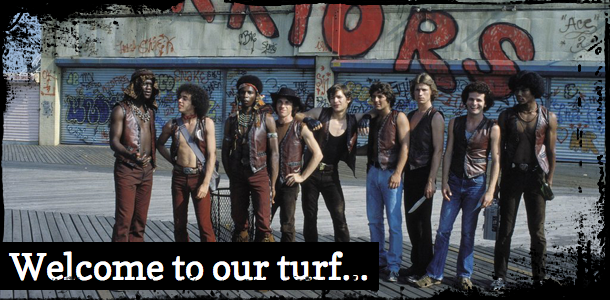
            Much like in the politically divided Jamaica of 1968 – 1977 (Chang, Chapter 2 “Sipple Out Deh”), New York gangs began as protective measure for the young people of the abandoned Bronx and other re-segregated neighborhoods that sprung up as a consequence of city planner Robert Moses’s “Urban Renewal” plans (Rose, “All Aboard the Night Train”). As racial whites, typically of Jewish, Italian, and German heritage were bused into suburban housing communities, Blacks and Puerto Ricans were left to fend for themselves in abandoned neighborhoods with no jobs, no resources, and no hope. Tensions grew and petty crimes escalated into violence, prompting the formation of local security outfits – then referred to as “crews” – that would protect members of the neighborhood. As one crew sprung up in a specific neighborhood, another would rise up in defense of another in the area (Chang, Chapter 3). The crews then transformed themselves into distinctive tribes which fought against one another and carried out specific traditions – “gangs” had finally emerged.  But the point of these gangs soon refocused as drugs began to invade the Bronx and police authorities retreated.  The gangs took it upon themselves to clean up their boroughs – rid the streets of junkies, drugs, and eventually moved on to providing meals for other youths and introducing the concept of “club houses”. In the absence of authorities and NGO’s, the gangs rose to the occasion to provide some law and order to the Bronx (Chang, pg. 49).
 
            But with all of their efforts, the community still suffered. Many of the Bronx youths were being raised in single parent households or by their grandparents, schools did not offer much in or outside of the classrooms, and random assaults on the streets were still commonplace.  Thus the gangs’ mission evolved once again, and gangs took on the persona that we know today – the surrogate family. Gangs like the Ghetto Brothers, Savage Skulls, Savage Nomads, Black Spades, and many others repurposed themselves to fill the void left behind by broken homes and disadvantaged neighborhoods. Minority youths, ignored (if not all together rejected) by the system, put on the “colors” of their gang and finally felt a sense of belonging. The gangs gave meaning and hope to hopeless boys and girls of color who were searching for something better (Chang, Chapter 3).  The gangs of 1970’s and 1980’s New York, particularly the Ghetto Brothers, gave a voice and a way out for the children of the Bronx, a way out of the invisible margins and into the pages of history.
 
Photos courtesy of CVLT Nation (www.cvltnation.com) and Noziopho Gumede of The Evolution of Hip Hop Fashion BlogSpot.

Socio-Historical Context of the Bronx Gangs and Their Culture

Some people assume that gang members are individuals who wear baggy clothing and are involved with drugs and violence. People are only paying attention to the things that are noticeable to the naked eye, but do not look closely enough to see that young women and men in gangs are struggling to make it everyday in the Bronx. Gangs are in the Bronx because of the historical events that occurred before gangs started and the lack of support they got from the government.
Before gangs evolved, African American and other minorities were struggling through the time period of deindustrialization. This time period starts the downward spiral for the urban people and leads the minorities to start gangs. The event caused a lot of people to lose their jobs and their stability to take care of their families. These companies decided to lay off their workers because technology was advancing and it was cheaper to pay for workers and goods overseas. No one seemed to care about what would happen to the people of the Bronx once the industrial companies left.   It was as if they were leaving their child to help fend for them self, so that they could do their own thing. The decline in the economy and employment had people in a bind. People were thinking what their next move was going to be because they did not have the money to go somewhere else. There were people who did have the money to move to suburban housings, but those who could not afford it were left in the Bronx. The government only cared about the wealthy and left the poor to take care of themselves. Everything had to do with money. To make matters worse, the city reduced the funds for social services, education, and public utilities. Reducing these necessary resources caused some people to resort to gangs. Perhaps these young teenagers joined gangs because their city failed to financially keep the only safe haven they could go to, to stay out of trouble. 
With the decline of reliable organizations, and the white flight effect, the young started to separate into different territories, so that they could feel safe. These boundaries created their safe haven since the government could not afford to pay for safe and reliant facilities for the public. The locations consist of the East Bronx, South Bronx, West Bronx, Soundview, and Tremont (Chang, Can’t Stop p. 43).  In each boundary there was a different gang and they were starting to affiliate with political parties such as the Black Panther Party uniting with the Blackstone Rangers, Mau Maus, and the Black Disciples (PowerPoint: Transformation of Gangs). Although the political parties were about harmonizing, the gangs had a different take on society. “They were the children of Moses’s grand experiment, and the fires had already begun… They did not burn for a distant ideology. They idolized the Hell’s Angels” (Chang p. 49). The men and women in the gangs were doing their thing and not following anyone else’s lifestyle. They wanted to show the city that they were in control and that when someone stepped on their turf they would have to follow their rules, or otherwise.
          The generation of the late sixties through eighties, knew that they were being surveillance by the media, police force, and everyone in their city because of their despicable mindset and actions. After the killing of one of the Ghetto Brothers, the Ghetto Brothers decided to make a make a treaty in remembrance of their brother and to stop the violence.  In a way, it seems that the only people who truly cared about the cause
were the gangs themselves. The media viewed the case as a propaganda for news and the police force took it as warning that something worse could occur. Police officers were even resorted to being undercover gang members, so that they could catch the “bad guys”. It was as if the public saw this as an opportunity to show how troubled society was in the Bronx because of the gangs. When truthfully, society was in a state of panic and did not clearly nderstand that the treaty would make things better. The peace treaty had only truly effected the gang members. Some members even saw it as a chance to make things right and give back to their community. One of the leaders, Africa Bambaatta took the treaty seriously, “He had been with Bam Bam as they cleared the blocks of drug dealers. Now he and other Spades assisted with community health programs” (Chang p. 63) Instead of relying on the government for help, the gang members themselves took action to help make their community better.
          Gangs may be seen as troublesome individuals who live in the ghetto, but they are caused to live and act this way because of the troubles they had to go through. Starting with deindustrialization and the decrease of financial funding’s by their government. Luckily their determination to change, from being seen as media propaganda of violence to showing the community they want to help them out, shows people that they are not dangerous. They are just like everyone else; they are people trying to make a decent living for themselves and their families. Like Hollywood said, “We have to live in this district. The whitey don’t come down here, man, and have all the, the fucked-up, fucking no heat in the wintertime. You understand? We do, jack, so therefore we got to make it a better place to live” (Chang p.59). 

JKW

he Socio – Historical Contextualization of Reggae music in Jamaica by Denisha M.


The political dimensions and economic devastation following Jamaica’s independence from Great Britain in 1962 were the conditions through which Reggae was born and thrived. The two political parties warring for power under the newly independent island nation were the Jamaica Labour Party (JLP) and the People’s National Party (PNP), the first taking up a more conservative ideology and the latter had a more socialist lean. The relationship between music and political, religious and global dimensions speaks to the rise of reggae music as a music of the people.
            Jamaican’s independence was not all that the people had expected as they were still confined to the economic infrastructure of the former governing body. Many of Jamaica’s working class found themselves at the mercy of warring political parties who controlled many aspects of their lives including their jobs and where they lived. In opposition and defiance of these conditions the people took to the streets, invading public spaces and defining social norms of propriety and responsibility. The music filling the streets and the beats and lyrics spilling out from the booming speakers spoke directly to the people and their feelings towards their own situation and their perceptions of the nation itself.
            The abolishment of slavery saw the rise of new political figures such as Jamaican born Marcus Garvey who advocated solidarity among Africans from all backgrounds and supported the idea of a mass migration back to Africa. After his fall many of his followers took this advice to heart and looked to Ethiopia for their new leader specifically newly crowned emperor Ras Tafari later renamed Haile Selassie. With this elusive leader at the head Rastafarianism grow in Jamaica and inspired new musical achievements. Rastas as they came to be known soon found themselves caught in political strife when aspiring political figure Seaga, a former music executive, in his desire to establish a JLP platform took violent action against Back – O – Wall, a ghetto with a heavy population of PNP supporters. He decimated the neighborhood, burned it to the ground and repopulated it with hired guns (Chang p. 25 – 26).
            While nowhere near economically sound the island nation did not hit heavy times until they became the focus of external investigation by the CIA. Before this political figures such as Michael Manley implemented many useful changes such as “lowering the voting age to eighteen, making secondary and university level education free and establishing a minimum wage” (Chang p. 31). It was only when Manley began making plans to establish relations with Cuba and exhibited a desire to form solidarity with other African nations that the CIA took an interest. This led to a decrease in aid from First World Nations and pushed Jamaica further in to debt, with their total owed doubling to 2 billion in just five years. After being denied loans from many North American banks, Jamaica was forced to accept loans from the IMF.
            The IMF contract called for a short term repayment plan which didn’t allow for Jamaica to establish their own stable economy. The stipulations imposed on the loan were all but crippling, it led to the closing of many schools and hospitals, the devaluing of the Jamaican dollar and an economy based on tourism which gave back nowhere near the return in profit compared to the resources it used.
            Reggae music was created to be a voice for the people to cope with and vent about the harsh conditions of their lives. They took to the streets and congregated in mass parties to release from the difficulties of the day. They took up public spaces where other areas where other spaces such as work and living spaces were very much controlled by the political happenings.


Socio-historical contextualization of reggae

 Reggae first developed in Jamaica in the 1960s and 70s but it developed slowly. It first started when Jamaica gained it's independence from England in 1962. But following this independence was mass poverty throughout the country because Jamaica's economy was largely based on former colonial arrangements. There were not many opportunities to make money and thus Jamaica became dependent on aid from other countries like the US. When the Cold War started, the tensions between the US and Russia and Cuba caused the US to withdraw it's support for Jamaica. In 1971, the US sent 23 million dollars whereas in 1975 they only sent 4 million. The massive debt forced Jamaica to accept emergency funds from the International Monetary Fund (IMF) but they imposed strict restrictions that wreaked the economy entirely, causing Jamaica to raise taxes and ultimately force people to leave or close their businesses. With the economic situation affecting everybody, people turned to music to voice their anger.

The early Carribean music were classified as Mento and Calypso. With the influence of American Jazz and R&B, they combined to create ska. Ska became the expression for the “Rude Boy” culture in the 1950s. Early innovators include Tommy McCook, Ronald Alphonso, and Don Drummond also known as the Skatalites. Ska soon developed into rock steady and then into reggae. Reggae was amongst the earliest forms of music that did not involve a live band. All that was required was records, mixer, and a powerful sound system. The most famous studio in Jamaica was called the Black Ark. Lee “Scratch” Perry was the owner and he recorded singers, bands and DJs so that he could mix and edit the sounds to make new sounds. Only needing a selector and records allowed artists to transform any yard into an entertainment location where people could escape the harsh realities of the economy. These yards soon turned into DJ competitions and battles over who had the most unique sound. From a accident where Redwood forgot to add the vocals to the music, dub was created and this with reggae took Jamaica by storm.

With reggae and dub becoming mainstream, politicians saw the effects it had on the people. The two political groups were the conservative Jamaican Labour Party and the leftist People's National Party. By using the popular songs for their campaigns, they could gain the support of the local populations. They also started recruiting the gangs to help them gain certain areas votes. In return the gangs were given jobs and other benefits. But this led to bloodshed as gangs fought over territories and politics. In the middle of this fighting, artists like Bob Marley called for peace and the end of bloodshed. But the wars took their toll as leaders and artists were assassinated.


Reggae became the voice of the people. From it's development from ska and rock steady, it became a mainstream form of entertainment that attracted the local people and those in power. Artists like Bob Marley used reggae to protest bring awareness about the harsh realities in Jamaica. With that, they brought reggae to the rest of the world. From reggae came hip hop in the Bronx and the hip hop culture we have today.  

Aaron C.

Monday, February 3, 2014

Bianca Berger- Socio-historical contextualization of Hip Hop Culture in NYC


Bianca Berger
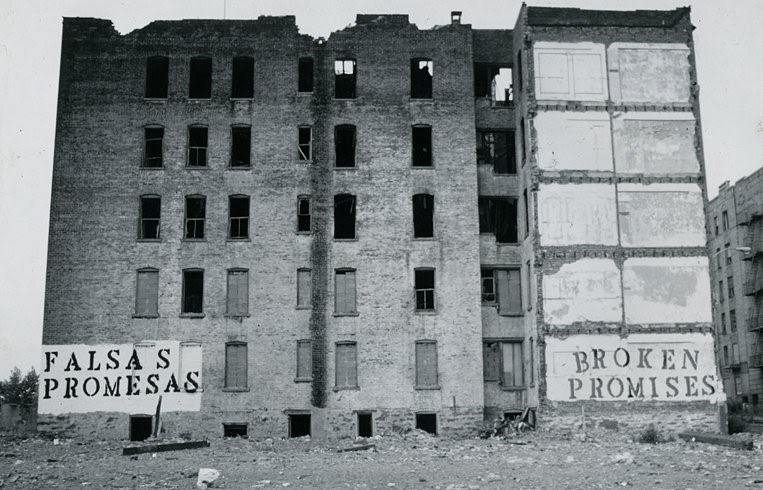
            As discussed in class and throughout several readings, the most notable event to trigger the birth of Hip Hop culture in New York is the building of the Expressway in 1970’s. However, the factors leading up to this decision are equally as important to the birth of Hip Hop culture. The integration of the growing telecommunication networks and corporate America combined with the quickly diminishing federal funds in the 1970’s in New York City created a housing crisis, widened the economic divide essentially destroying the “relatively well-off white blue collar city;” ultimately leading to corporations and telecommunications taking over the government’s role. Deindustrialization led to the building of the Expressway, leaving a city and people in ruins.
            The 1970’s in New York, the rapidly growing multinational telecommunications network alongside corporate power set the stage for a decrease in job opportunity for the already discriminated minorities, as well as, contributed to corporate control over market conditions. These factors ultimately caused shifts in the occupational structure- from high-wage, high-employment economy to a low-wage, low-employment economy. The blue-collar workers of the Bronx were being quickly pushed out of the job market due to quickly advancing technology and corporate power. As Tricia Rose mentions in her book, Black Noise: Rap Music and Black Culture in Contemporary America, a country once “grounded in manufacturing, trucking, warehousing and wholesale trade…[was now moving toward] producer services” (Tricia Rose 28-29). It was out with the old, in with the new, previously valued legitimate jobs that people in minority’s went to school for and were trained in, became essentially obsolete. With information processing and communication technology at the heart of corporate America, there was a strain on the flow of information; therefore, completely cutting off the blue-collar workers from shared information and the job market.
            With New York’s federal funds diminishing, social services began disappearing as well. The state was in despair, but finally came to an agreement for a federal loan; however, with a whole set of specific rules and regulations on what to do with the money. With these new regulations, Daniel Walkowitz recalls, “60,000 city employees went off the payroll, and social and public services suffered drastic cuts” (Tricia Rose 28). This too, largely affected the unequal wealth distribution and with that, a housing crisis. With corporations buying out real estate allover the city to build luxury homes, it provided a limited availability of affordable housing. Tricia Rose tells that at this period, low-income housing continued disappearing, leaving Blacks and Hispanics disproportionately occupying the poverty line.
            This all meant that new immigrant populations and the city’s poorest residents “paid the highest price for deindustrialization and economic restructuring” (Tricia Rose 30). Due to the very strict and specific regulations and rules accompanied by the federal loan, the bottom 20% of the income scale felt an absolute decline, while the top 20% reveled in economic growth. Corporate takeover and frayed local communication patterns highly contributed to the relocation of the “fragile people of color” into the South Bronx, while the federal loan enabled the white-collar workers to relocate to the suburbs. The city’s politically motivated “urban renewal” project is what lit the match to the fire that is, Hip Hop culture.  Robert Moses, legendary city urban planner, designed an Expressway to better accommodate those white-collar workers with a faster commute to their corporate jobs in the city. The immigrants, unemployed, now unimportant blue-collar workers occupied the densely populated “slums” of the South Bronx. These people were literally being pushed out of the city, pushed out of the job market, and even pushed out of the sharing of information. They were the rejects of the city, pushed into a place that an entire city disregarded and saw as a viable spot to build through. Marshall Berman paints a devastating picture of the aftermath; he describes, “Miles of streets alongside the road were choked with dust and fumes and deafening noise…” (Tricia Rose 31). Now a city in ruins, the city administration still refused to admit the wreckage left from the previously functioning South Bronx. The building of the Expressway benefited the upper class and so, the poor were overlooked as well as the entire South Bronx.
            Deindustrialization- the consolidation of corporate power with multinational telecommunications at the heart of its operations combined with the harsh rules and regulations of the federal loan created the housing crises, widened the labor gap, pushed minorities into the “slums” and then all together, declared those people and their land as ‘nothing.’ Hip Hop arose as so many artists, writers, poets, and people acknowledge as a voice, expressing the “tensions and contradictions in the public urban landscape,” with a disregarded people, buildings and city all screaming out that “We are here! We will be heard!” Tricia Rose says it perfectly, “these abandoned parts, people, and social institutions were welded and then spliced together, not only as sources of survival but as sources of pleasure” (Tricia Rose 22). Hip Hop culture including gangs, graffiti, and music were all developed as a result of this isolation from mainstream society. Gangs were formed as another form of a family, a crew of rejects from society who came together to create their own society. Graffiti the literal physical expression of “we are here! We will be heard!” used as a way to force mainstream society to look at the people they shunned and pushed out of their city. Music, assembled through using resources, basically trash to create their own music and beat to express their anger and suppression for so long- they created their own genre. Mainstream society wanted so badly to ignore them, to shun them from their society, the South Bronx retaliated with Hip Hop culture.